PayPal
My team redesigned PayPal's merchant tools and resolved all 20 pain points research found.
The Challenge
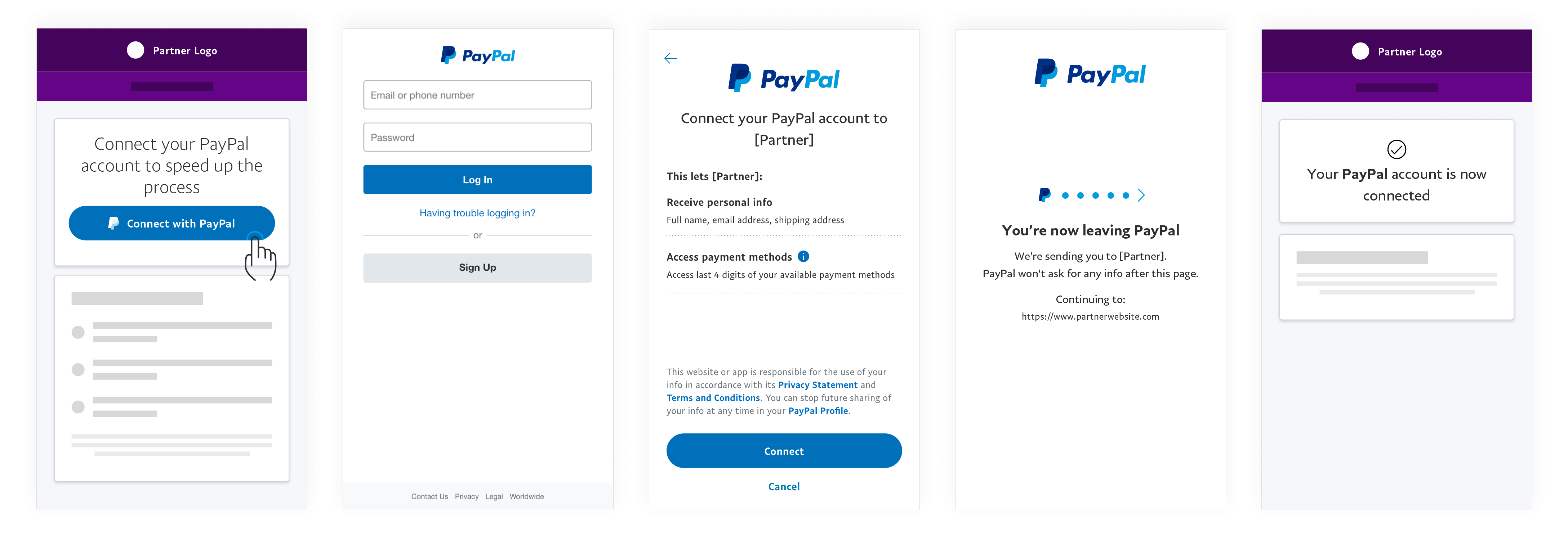
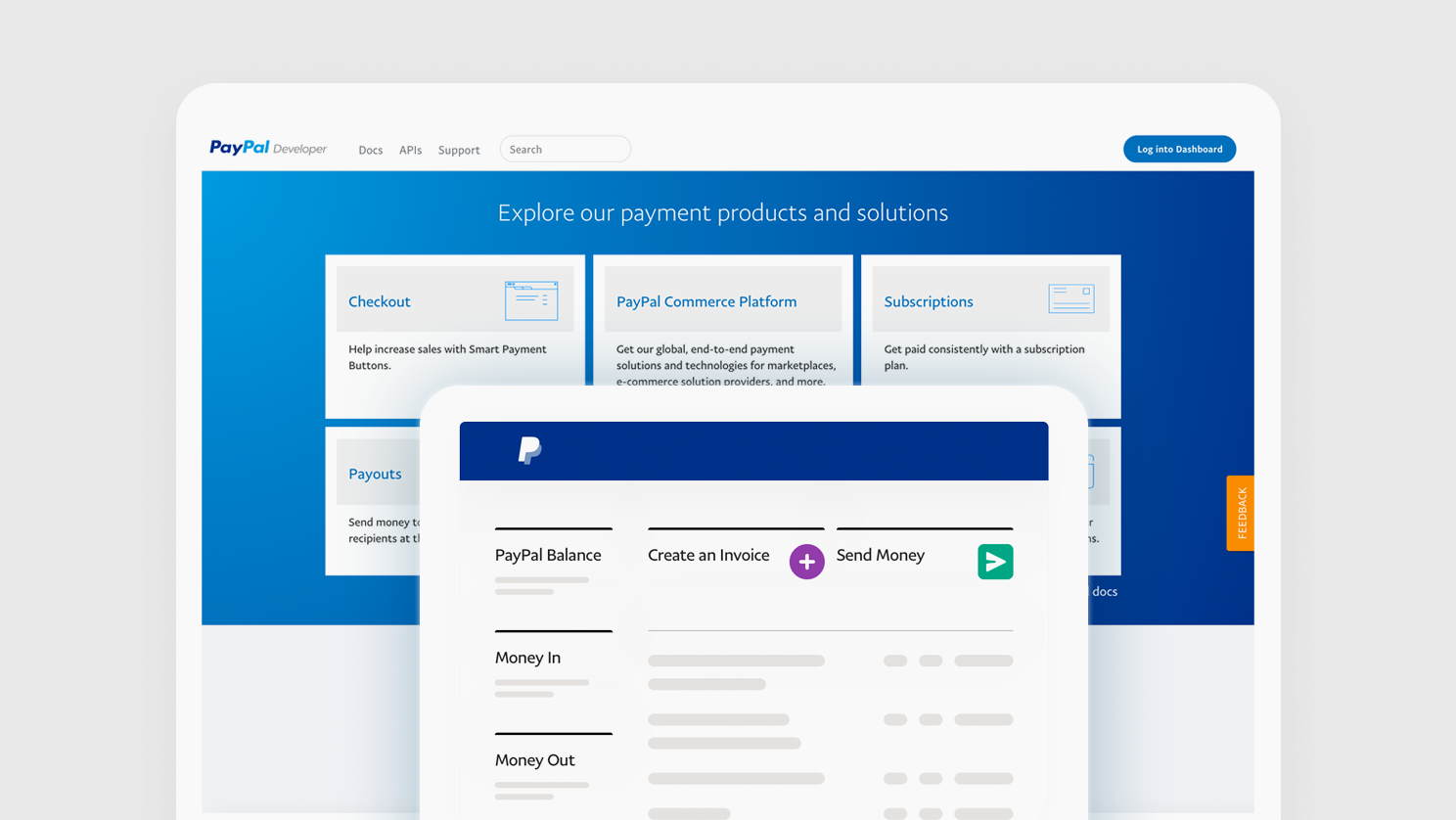
PayPal moves money across 200+ markets, and behind the consumer experience is a complex merchant platform that businesses depend on daily. My team focused on commerce and checkout: the tools that help sellers accept payments, manage risk, and grow their business at global scale.
The goal was to make every merchant touchpoint, from onboarding to checkout to reporting, feel as smooth for the seller as PayPal already felt for the buyer. PayPal Checkout was the centerpiece, letting customers buy without re-entering shipping and billing details while keeping the merchant secure.
The Approach
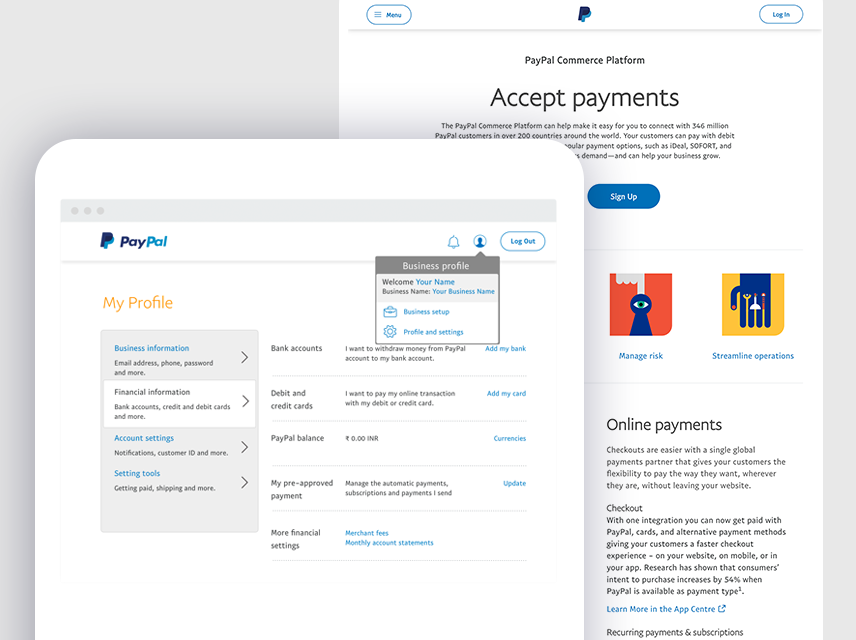
With internal and external research teams, we found 20 major pain points across the merchant and consumer sides. The research also showed why checkout mattered so much: consumers were 54% more willing to buy when a business accepted PayPal, 59% of PayPal users had abandoned a purchase because PayPal wasn't available, and 44% trusted a business more when they saw their preferred payment provider up front.
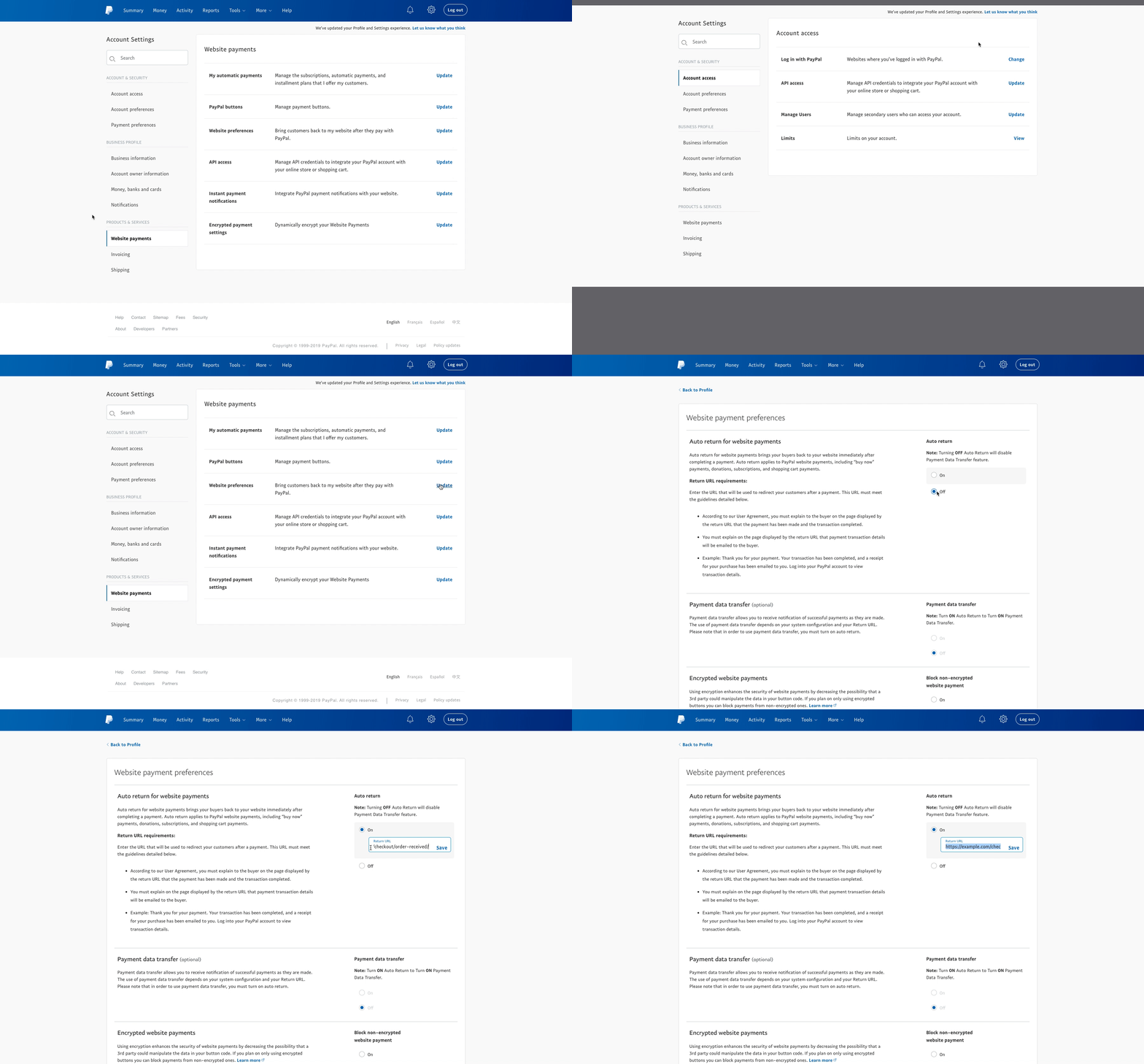
I designed user flows and interactions with the UX team that simplified the merchant experience while keeping the depth merchants relied on, and we ran several rounds of usability testing with real merchants to catch friction a spec review would miss.
The redesign worked across every device, gave sellers the information and controls they needed, fit into PayPal's wider ecosystem, and addressed all 20 pain points.