Mozilla Pocket
As a Senior Product Designer, I worked on Pocket's reading list and discovery in Firefox.
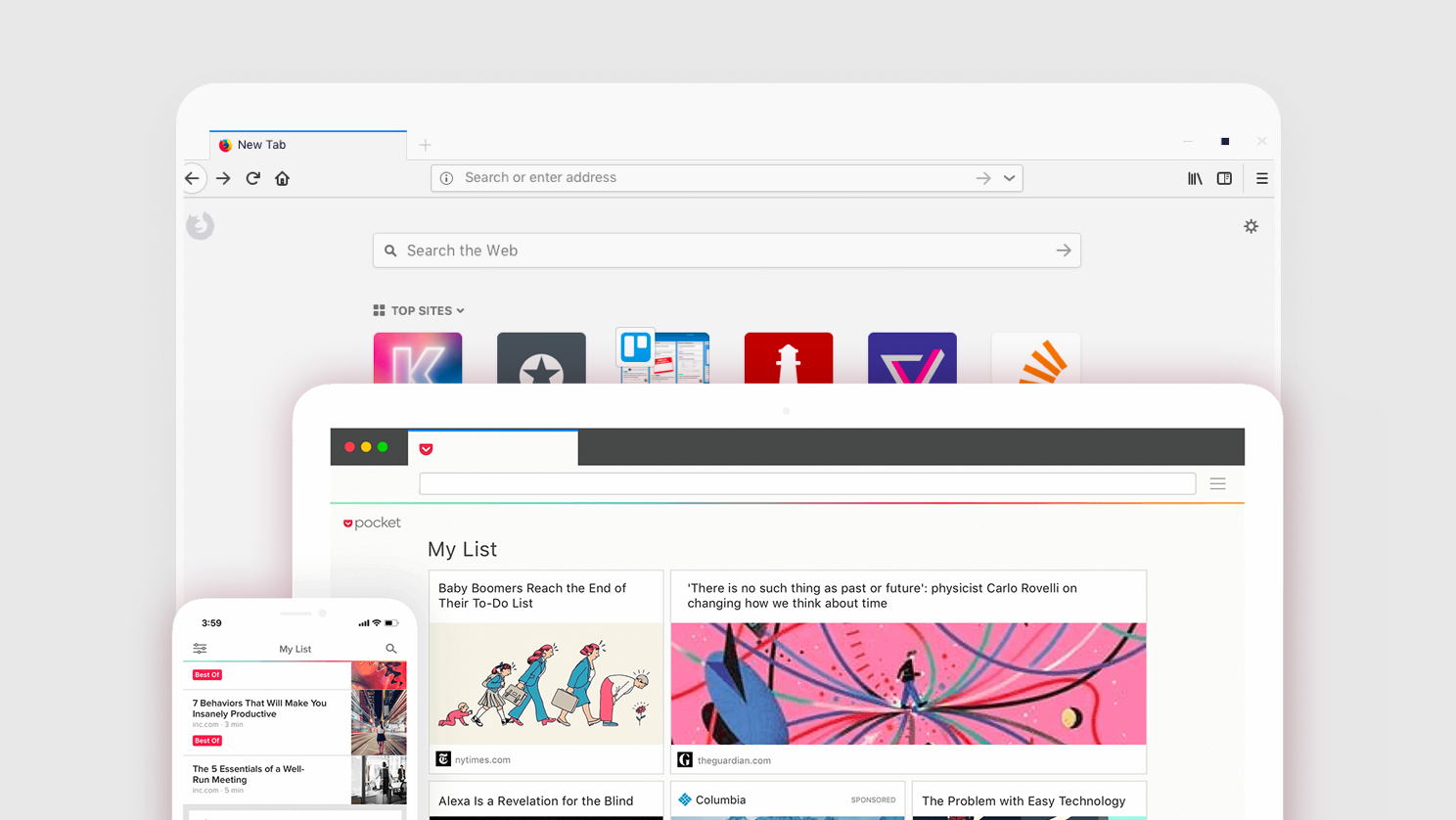
The Challenge
Pocket helps people save articles and videos from across the web and read them later, distraction-free, on any device. Integrated into Firefox, it strips away the noise and leaves just the content. Behind the simplicity is a recommendation engine that understands which links lead to genuinely high-quality content worth a reader's time.
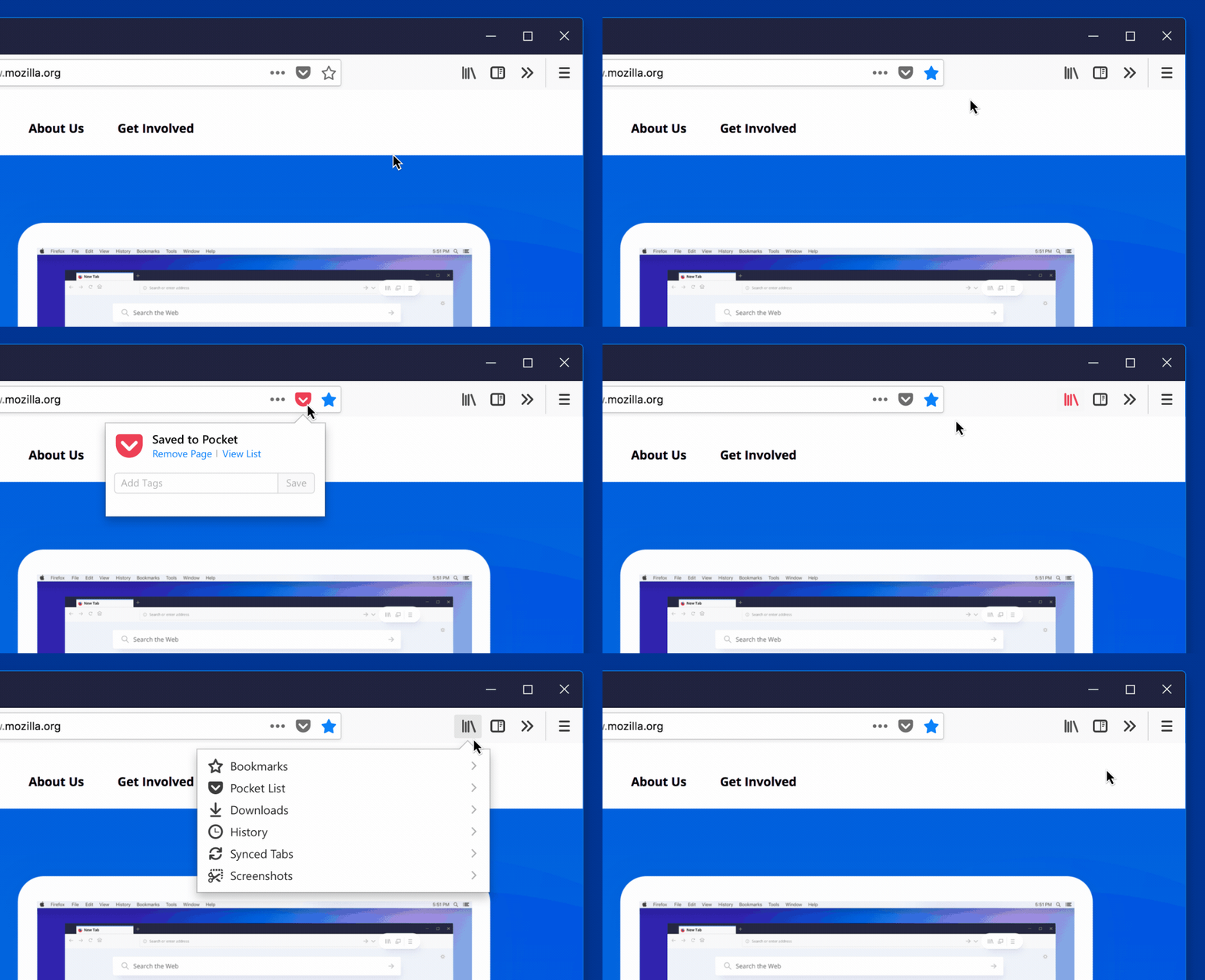
The challenge was making Pocket feel personal and intuitive inside Firefox, introducing features in context based on how people actually save and read. We started with behavior: what does saving offline content mean to different people, and when do they bookmark instead of saving to Pocket? Early usability testing shaped the design decisions that followed.
The Approach
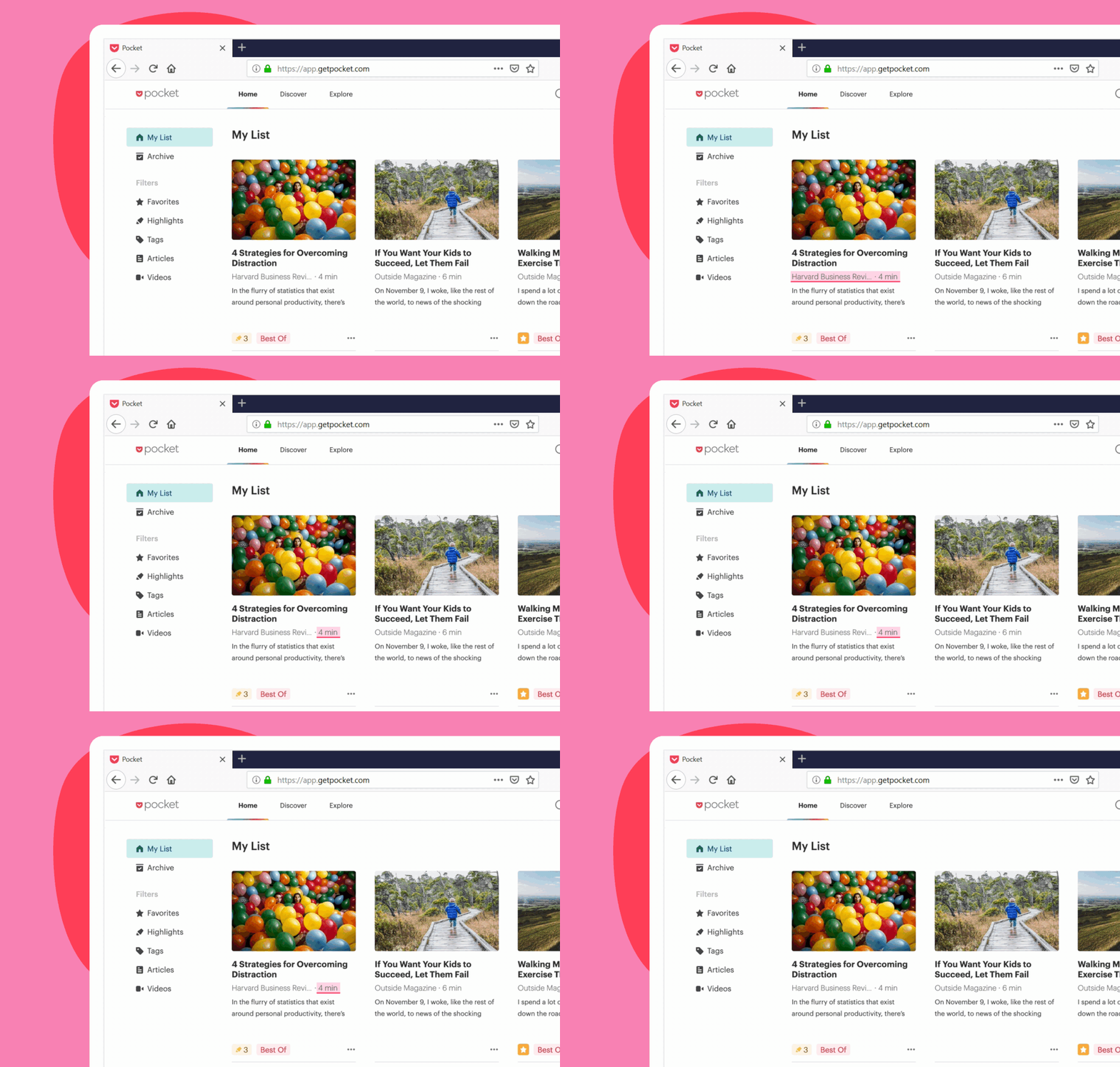
We simplified how reading lists looked so people could find what they came for faster, adding excerpt previews, estimated reading times (inspired by Kindle and Medium, but native to the extension), and annotation support.
Accessibility drove a lot of the thinking too. Customizable fonts made Pocket usable for people with visual needs, and a highlight feature let readers keep the quotes and passages that mattered to them. We tested every addition against one question: does this help someone get more from what they're reading?
Design, content, research, and engineering worked together from testing through prototyping, and the integration carried Pocket's experience across devices so readers could pick up wherever they were.
