The work, in product
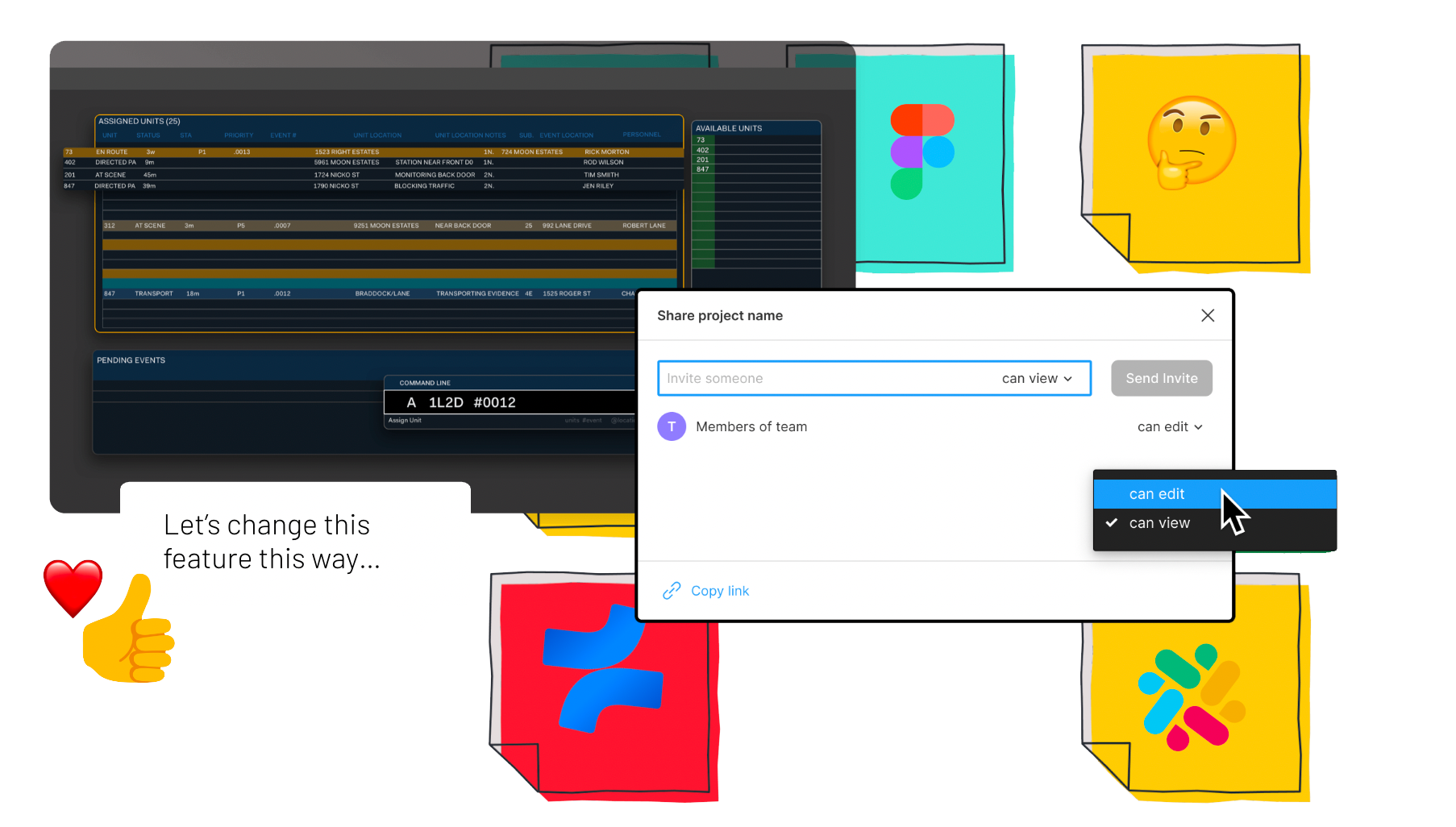
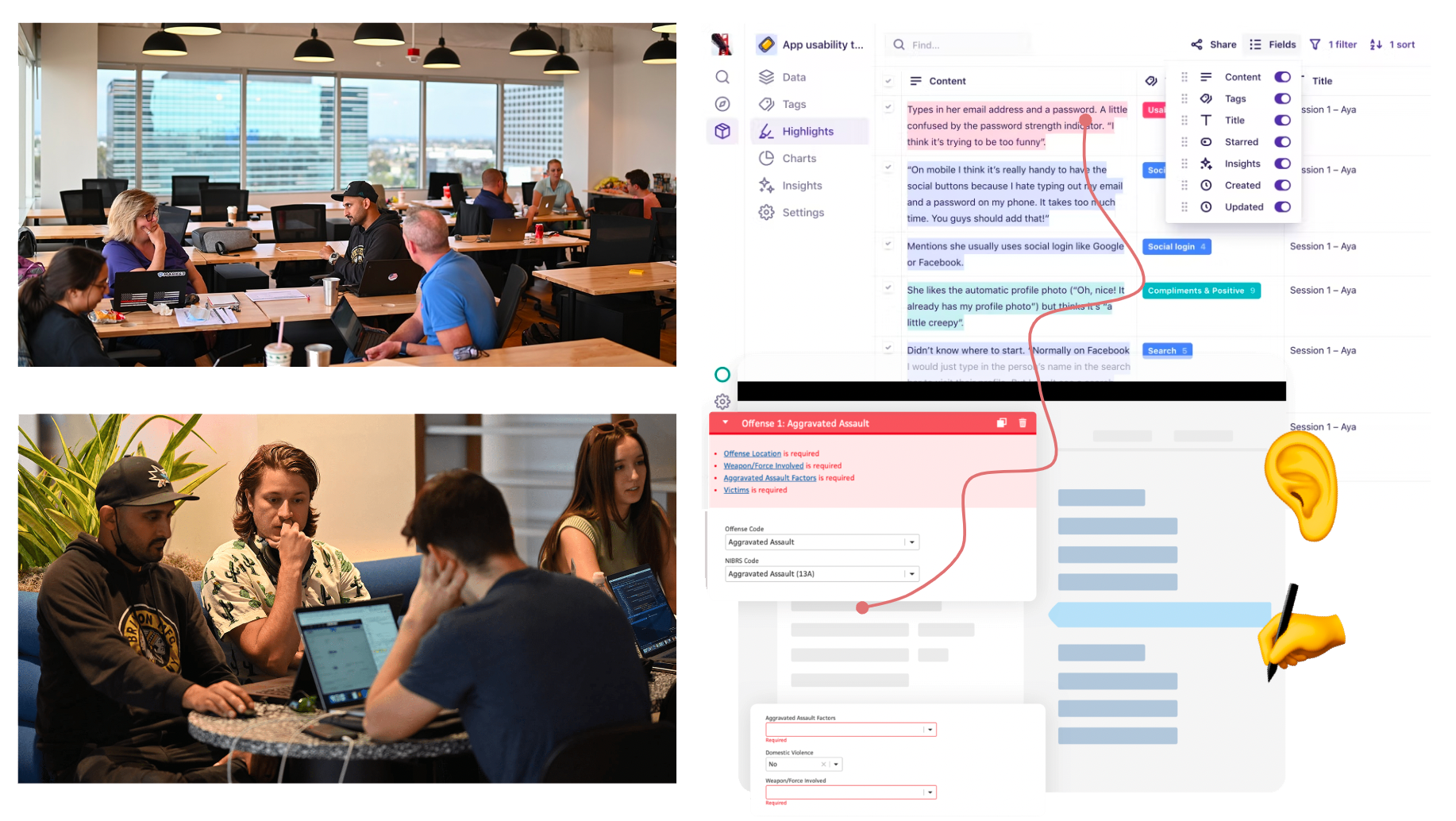
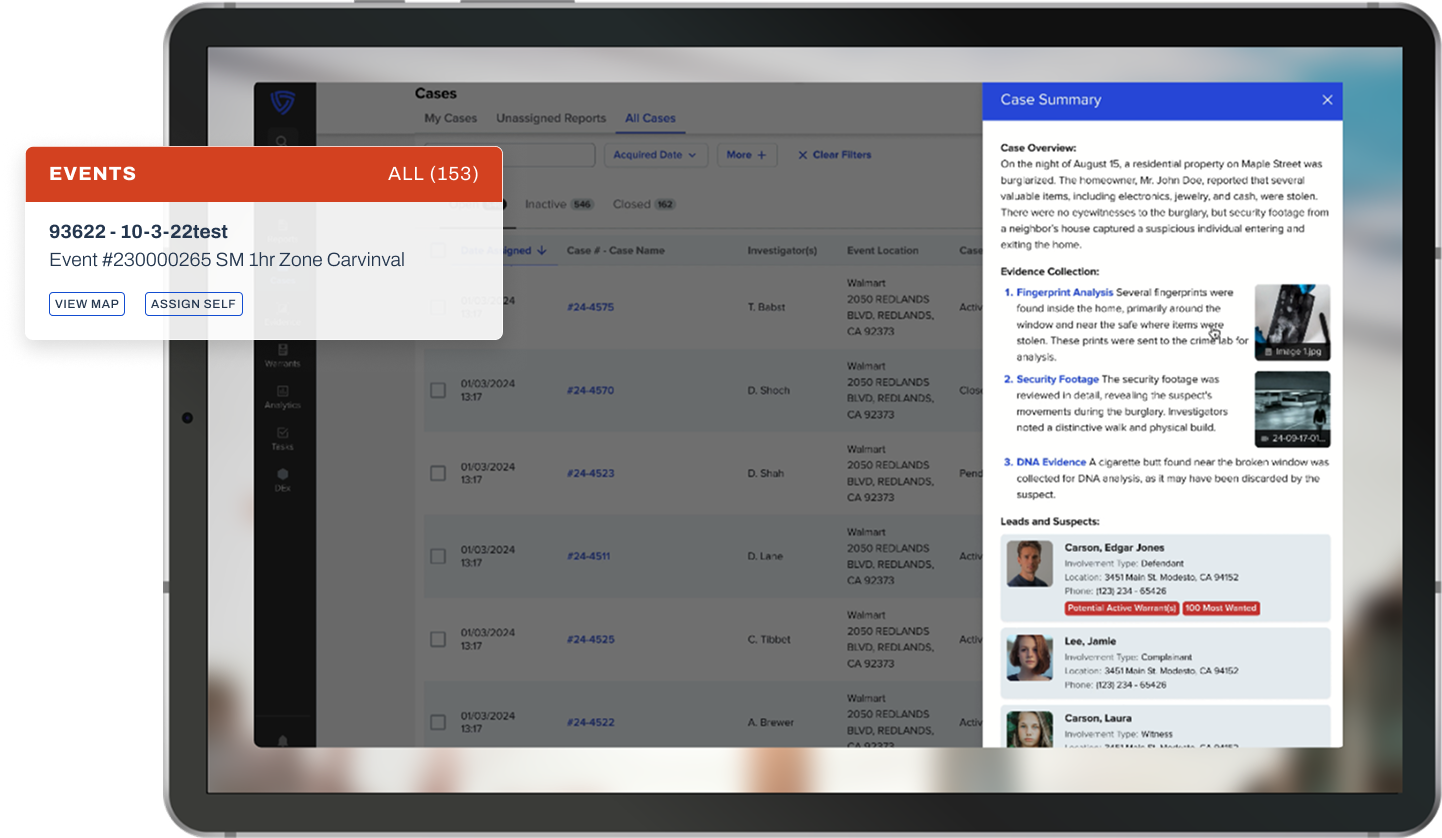
Some of the surfaces we partnered on. Where the practice showed up day-to-day.
Mark43 runs public safety from the 911 call to the court-ready report, in a regulated market where records have to stand up to scrutiny and screens have to work at 3am. I joined as its first design leader, grew design and research from 3 people to 18, and helped engineering move from Waterfall to Agile.
One design org and one design system across every step
Mark43 makes cloud-based software for first responders and the communities they serve. The tools have to bring transparency, accountability, and speed to public safety. The pitch is simple: when the software works better, response times drop and communities are safer. That's what kept the work urgent every day.
Public safety tech is notoriously outdated, with poor usability, little thought for accessibility, and workflows that ignore the people who use them. Modernizing the interfaces was the easy part. The harder part was getting real empathy for first responders and the communities they protect into every decision, and that meant changing how the whole product org worked, beyond design.
I was the first design leader in an engineering-led R&D org, with three designers and no practice around them, so most of the work was building the conditions for good design to ship.
No career ladder, no calibrated critique, no shared definition of “good.” Designers were doing strong individual work without a practice around them, in an industry top designers often overlook.
Design wasn't part of the roadmap conversation. Decisions were made in eng leadership, then handed to design to dress up.
A Series E company scaling fast on a process built for predictability. The seams were starting to show in every release cycle.
I ran two investments in parallel, the practice and the research engine, because hiring without research would have scaled opinions, and research without a practice would have had nowhere to land.
I shipped a career ladder in the first 30 days, then built working partnerships with engineering and product leadership. Research turned out to be what changed those relationships. Once engineers and PMs had been in precincts and dispatch centers with us, research became something the whole product org did, design joined roadmap and quarterly planning, product, engineering, and design started working as trios, and engineers began showing up to design critique.
The first artifact, shipped in 30 days. Two parallel tracks, calibrated against each other. Designers got a credible path to grow on. Hiring managers got a calibrated bar.
She established a design career ladder where none had been before. She retained design ICs long past their typical tenure, and aggressively hired for a company in an industry often overlooked by top talent.
James Friedman, Head of Product, Mark43 (now Head of Product at Cinder)
Public safety software gets used at 3am, in vehicles, under stress, and the principles had to hold up there.
Every decision starts with the responder and the community they serve, so field research comes before the design work does.
These tools run in cars at 3am and in dispatch centers under load, so contrast, target sizes, and focus order were requirements on every screen, and the hardest context set the bar.
Design's influence came from what we brought to the table: research from the field, prototypes people could react to, and a clear point of view. That's how design got invited into decisions it used to hear about afterward.
A day in public safety runs across five operational stages. Friction concentrates in the middle, where the report has to hold up, the context has to carry, and the next shift inherits whatever you didn't document.
Triage 911 calls and route the right unit, fast.
Caller information fragments across multiple systems and screens.
Arrive on scene, assess, and stabilize.
Hard to pull prior context on a person or location in the moment.
Build a complete record while leads are still fresh.
Reports compete for attention with active calls and field work.
Document what happened with enough detail to hold up later.
Reporting eats hours; prior reports and templates aren't reusable.
Hand off to the next shift and to command without dropping context.
Information loss between shifts is the unspoken norm.
The org-building work ran in four phases, and each one left behind something the team kept using after it was done.
What's the actual state of design influence here? Who's blocked? Where does the unit of work begin?
Designers need a ladder to grow on. PMs and engineers need a partner to engage with. The first 60 days set the rest.
Hiring fast without breaking the practice, and holding the standard as the team grows sixfold and takes on more of the product.
A practice that keeps running without me, with senior leaders owning the rituals day to day.
Mark43's product spans the operational chain from 911 call to court-ready report. My team partnered across the surface area, with deepest engagement on the field-facing tools where reporting fatigue lives.
911 call intake, unit assignment, real-time location and status.
Field-facing access for first responders during a call.
Reporting, booking, evidence, the system of record for an agency.
Digital citation issuance and management at the roadside.
Operational dashboards and public reporting for leadership.
Each artifact closed a specific gap in the practice. Together, they made the function durable enough to hold the standard whether or not I was in the room.
The first artifact, shipped in the first 30 days. Gave every designer a credible path to grow on, and gave hiring managers a calibrated bar.
Version one started in jail and records management (JMS and RMS), later grew into CAD, and shaped every product. It meant faster handoffs to engineering, better accessibility reviews, and the same foundation for every new designer.
Field trips brought engineers and PMs into precincts and dispatch centers, and research became a shared habit across the product org.
I championed the move from Waterfall with engineering leadership. It was a hard change to make, and the right one for a Series E company growing at enterprise speed.
Some of the surfaces we partnered on. Where the practice showed up day-to-day.
When the software works better, response times drop and communities are safer.
The mandate that shaped every decision
These are the numbers I point to when asked what changed at Mark43.
Three calls I'd defend in any retrospective. Each one gave up some short-term comfort for something that kept paying off as the org grew.
Growing sixfold, I couldn't spend a quarter walking every senior hire through the work while product teams waited for design, so I trusted senior ICs to find their footing. The cost was uneven onboarding in the first two months, and the gain was design support across the product while we were still hiring.
Building a system before the team needed it slowed us down for a quarter. By month six it was the reason new designers could ship to the same accessibility and consistency standard as everyone else, first in JMS and RMS and later in CAD.
Every workflow we shipped was validated with the people who'd use it, whether that took a quick session or a longer study. Cycles were sometimes slower, and in exchange we knew what we shipped would hold up in the field, which is the test that counts in public safety.
What I'd give more time to is the work after the foundation. We grew the team 6× in under two years, shifted Waterfall to Agile, and got engineers and PMs into precincts and dispatch centers with us. What I didn't fully see coming was how hard it would be to make any of that durable beyond my own tenure.
Some of this was velocity. When you're the first design leader at a Series E platform scaling at enterprise speed, every quarter brings a new fire. We built rituals (critiques, learning sessions, research trips) but rituals only stick when their owners stick. A fast-growing team is a team in constant flux.
What I'd do differently is invest earlier in the second layer of leadership. Hiring senior designers wasn't enough. They needed air cover to own the rituals, the system, and the partnerships I was holding together day-to-day. What lasts at a public safety platform is the practice you leave behind, and that's where I'd push harder now.
