Agero
I designed Agero's dispatch dashboard: 43% adoption in month one, 76% positive feedback.
The Challenge
Agero builds white-label roadside assistance software for major vehicle manufacturers and insurance providers. The problem was data transparency: during a roadside event, client services teams couldn't see what was happening in real time across the country. User interviews made the cost plain, because better information meant faster help and lower costs.
To build the case for change, I organized company-wide empathy exercises that put stakeholders in the shoes of a customer stranded on the side of the road, talking to an agent who didn't have the right information. That was the turning point, and afterward reporting and transparency were a shared priority across the company.


The Approach
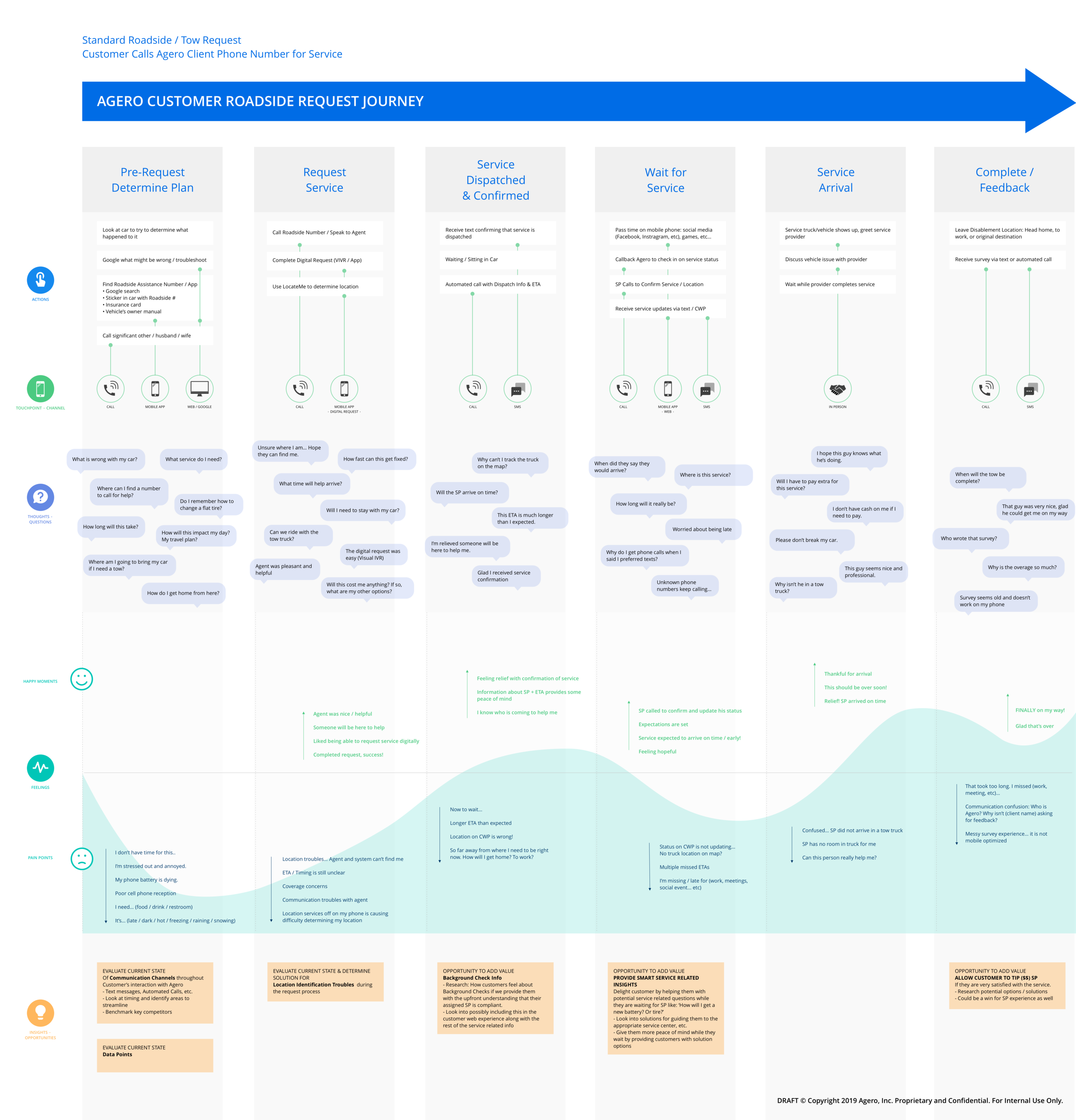
I ran a workshop to map where end users were getting stuck, and the findings became a customer journey map the team designed against.
The dashboard had to work for service providers in the field and client relations teams at their desks, on every device, so the platform work grew into a full update of our design system. It saved development time, cut down design iterations, and gave every team the same patterns to build with.
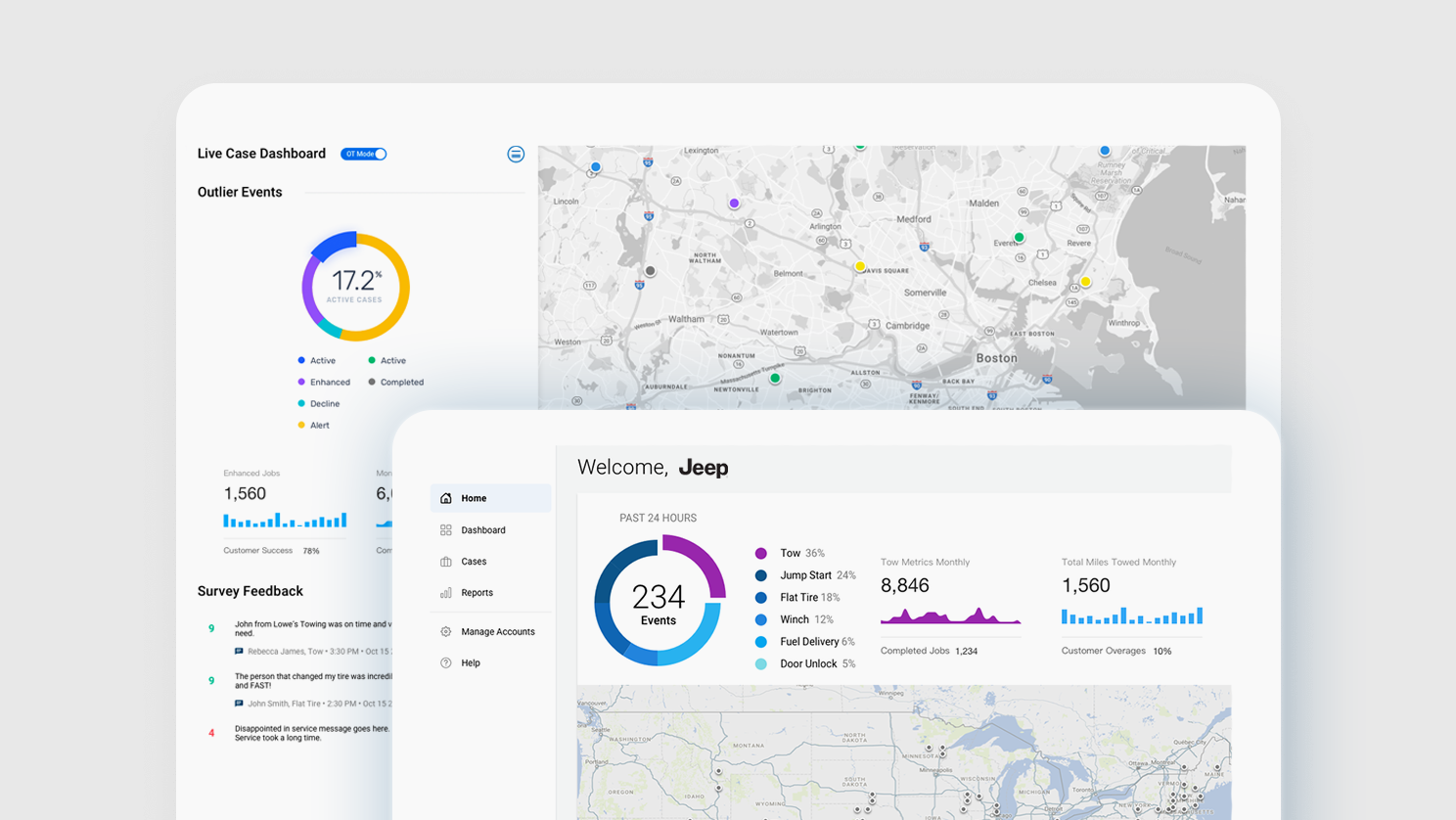
With stakeholders bought in through the research, we shipped a dispatch dashboard that showed client services teams policy details, vehicle data, service provider notes, and event status in real time, at a glance.
It reached 43% adoption across clients in the first month, with 76% positive feedback on agent responsiveness.
